
A Binsar Trip from Delhi: Three Days of Birdsong, Forest Trails and Shared Meals
By Alternate Travel · Updated 10 November 2026 · 10 min read
It’s 8:30 on a Thursday night in Delhi. The traffic is still honking, your phone is still buzzing, and you’re climbing into a tempo traveller with nine people you’ve never met. Someone passes around the snack they were asked to bring to share. By the time you cross the city limits, the conversation has started, and nobody is checking their email anymore.
This is how a Binsar trip from Delhi begins. Binsar is a forested ridge in the Kumaon hills near Almora, Uttarakhand, about 380 km and one night’s drive from the city. It sits inside Binsar Wildlife Sanctuary, so there’s no mall road, no traffic and no rows of hotels. Just oak, rhododendron and pine, and on clear mornings, a line of Himalayan peaks on the horizon.
Here’s what three days there actually feel like, followed by everything you need to plan your own trip.
- Where
- Near Almora, Kumaon region, Uttarakhand
- Altitude
- About 2,420 m
- From Delhi
- ~380 km, 8–9 hours by road
- Nearest railway station
- Kathgodam, 117 km
- Best time
- April–June and September–November
- Ideal stay
- 2 nights (a long weekend)
- Mobile network
- Limited (BSNL works best)
- Next group trip
- 3 Dec – 6 Dec · ₹12,500 per person
The walk in: where the city falls away
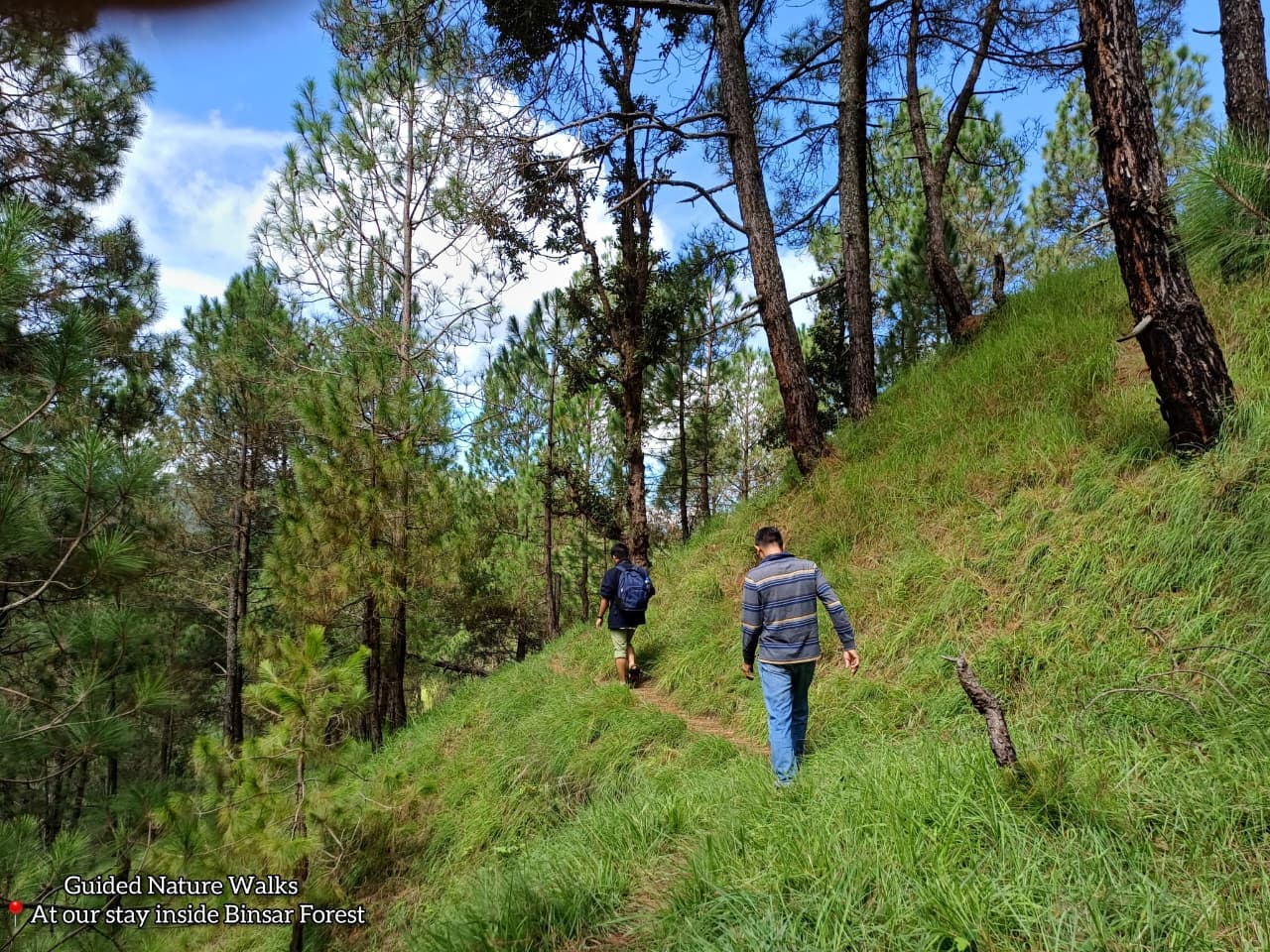
You wake up as the road starts to climb. By 8 AM the tempo traveller stops, but not at the door of the homestay. The last 1.5 km is on foot.
Backpacks on, you step off the road and onto a trail carpeted with pine needles. The air is colder than you expected and smells of resin. For the first few minutes everyone is still talking. Then, one by one, people go quiet, because the only sounds left are footsteps, wind in the trees and birds you can’t name yet.
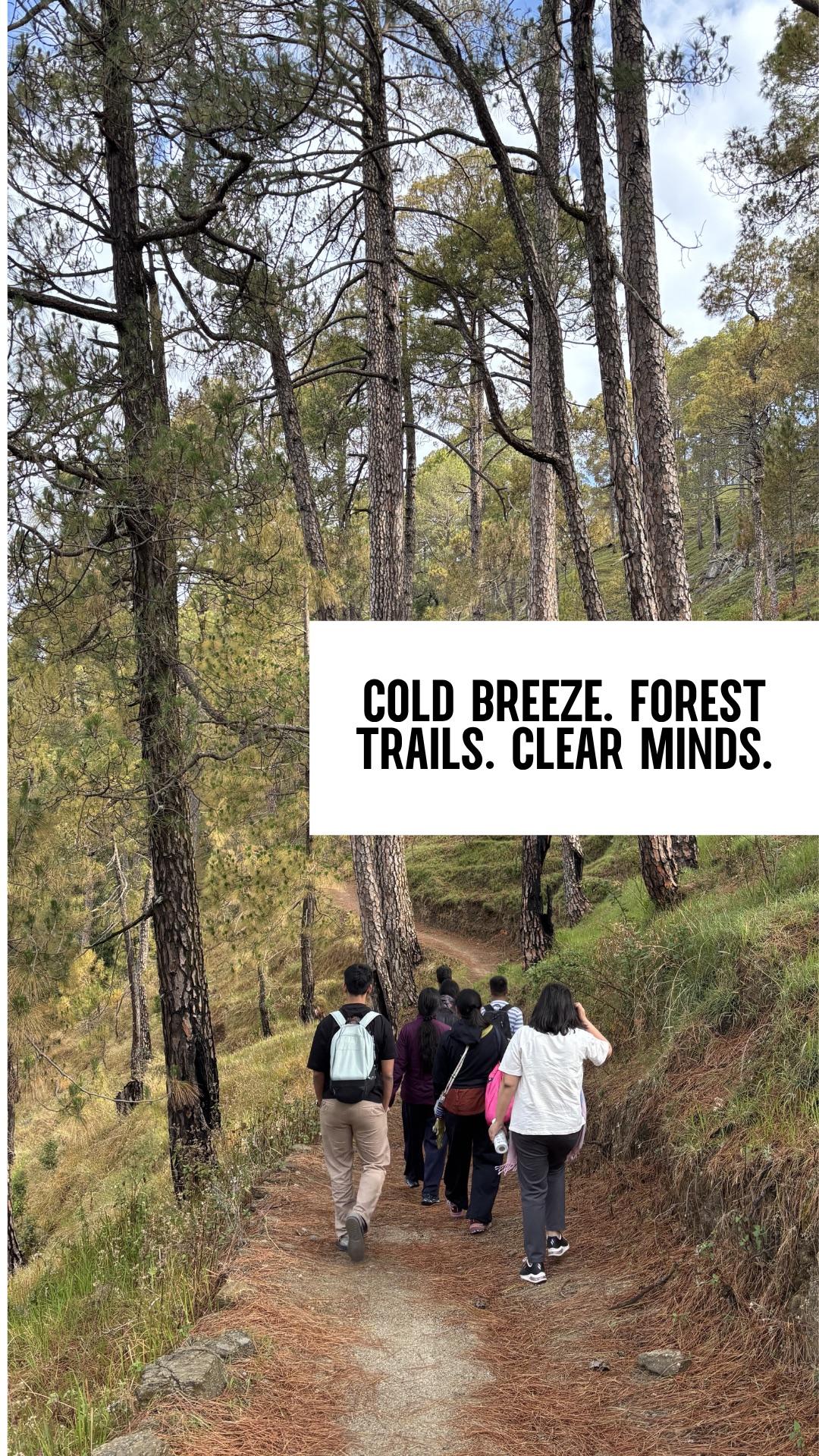
That walk is on purpose. It’s the line between the life you left in Delhi and the next two days, and by the time the homestay appears through the trees, you’ve already crossed it.
Day 1: doing nothing, on purpose
There’s no schedule on the first day. Breakfast is cooked by the family who runs the homestay, and everyone gets a journal to carry through the trip. After that the day is yours: chai on the verandah, a nap, a long conversation with someone you met eleven hours ago.
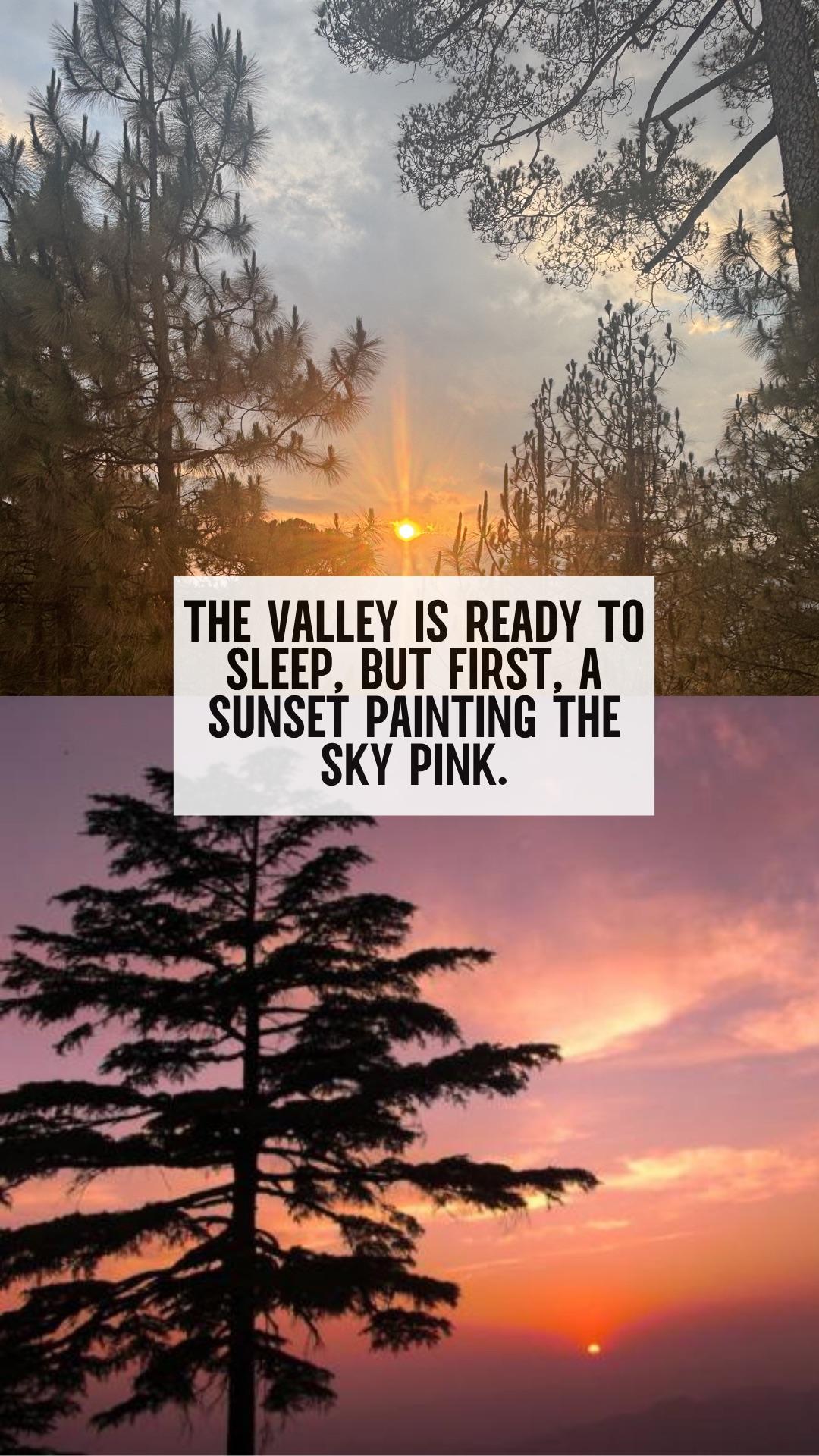
In the evening the group walks out to watch the sun go down. For five minutes nobody speaks. The sky turns orange, then pink, behind the silhouettes of pine and deodar, and it’s the first time in weeks many of us have watched a sunset without filming it.
Dinner is early, the bonfire is optional, and so is staying up. Most people are asleep by ten. In Binsar, the forest decides when the day ends.
Day 2: birdsong, berries and a river
You don’t need an alarm in Binsar. Around six, the birds start, and a little later you might hear a sharp, dog-like bark echoing across the slope. It’s a barking deer, one of the sanctuary’s shy residents. You step outside with a blanket around your shoulders and the valley is still half asleep in the mist.
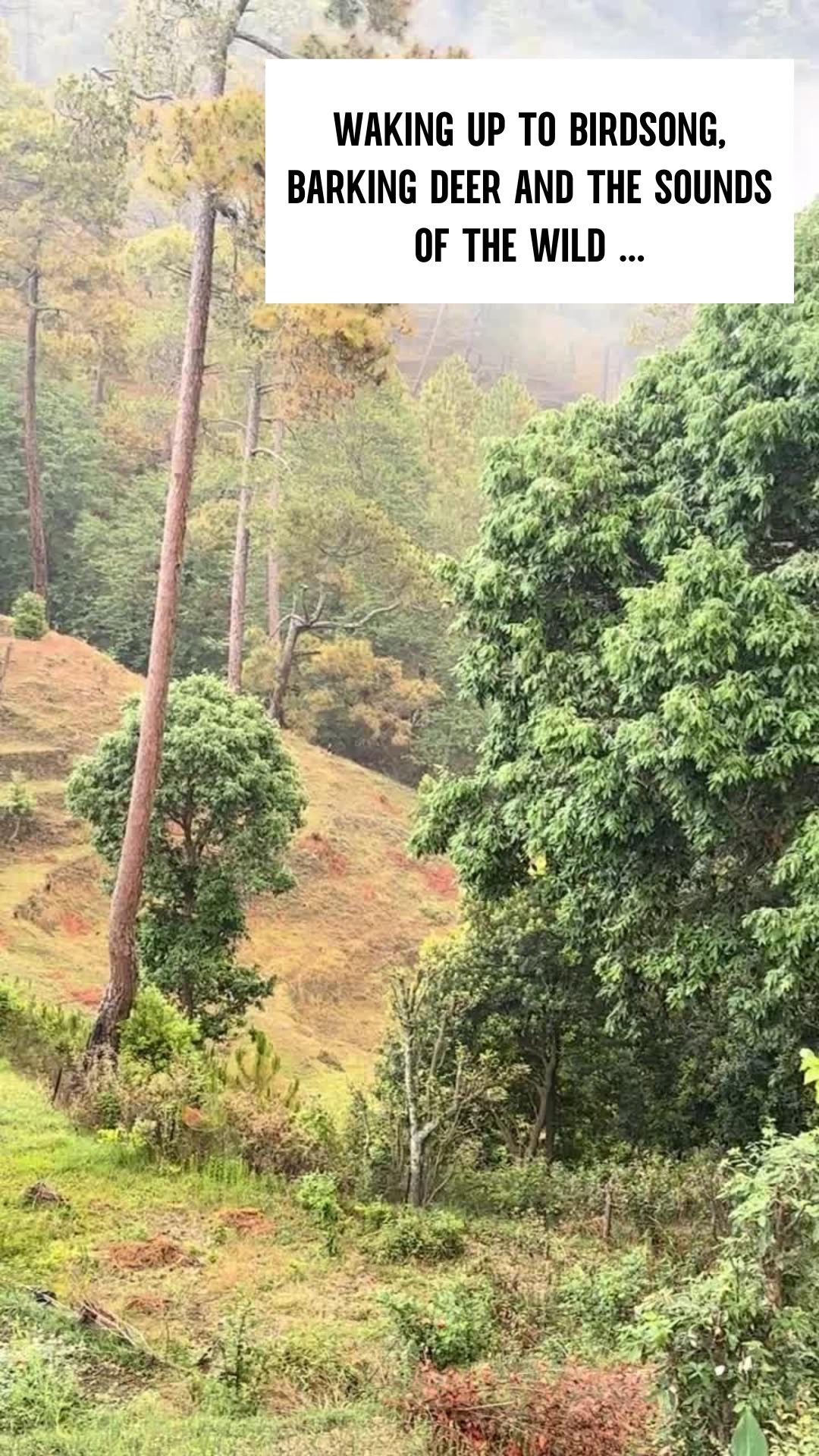
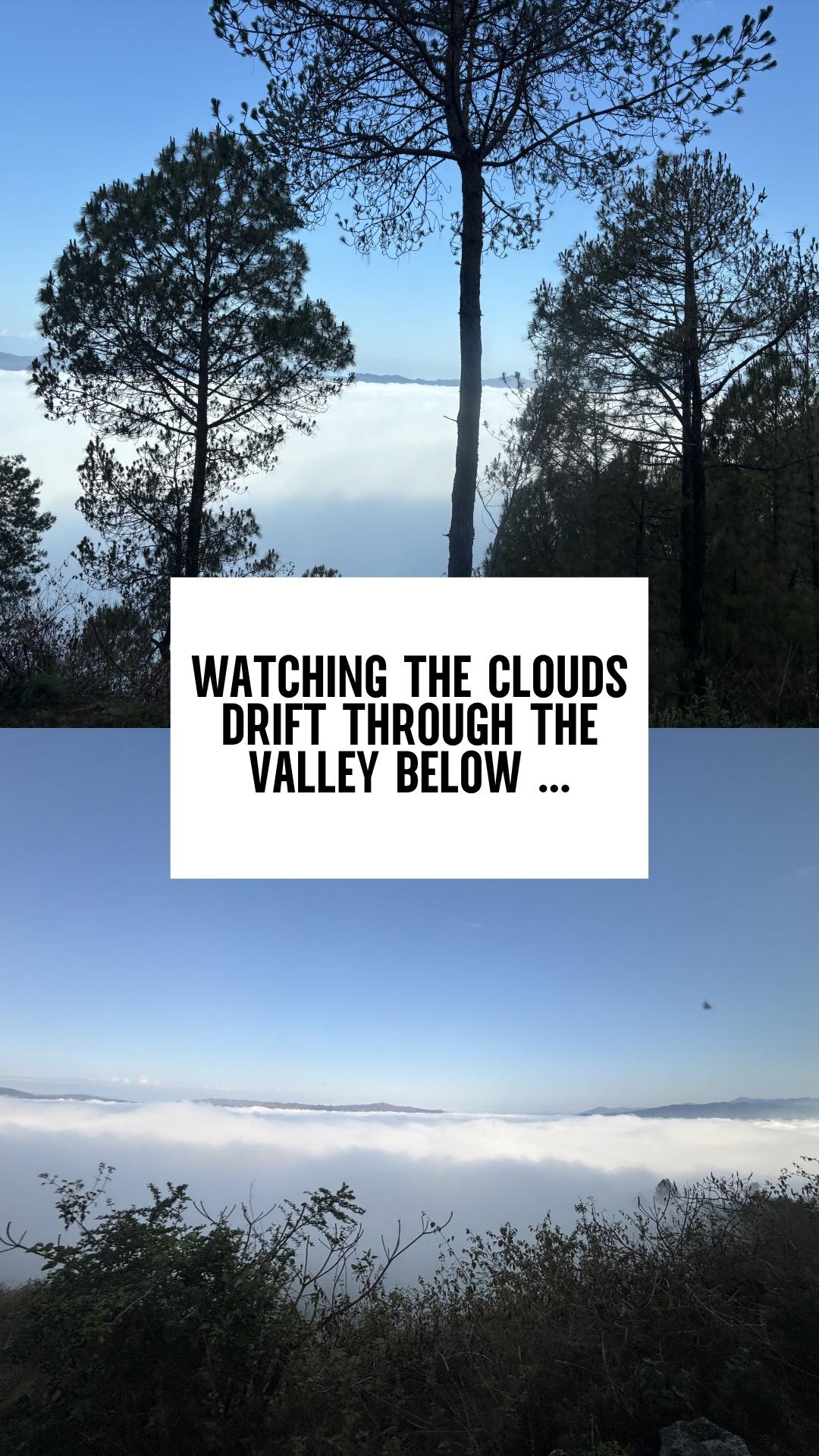
On clear mornings the clouds settle below you, filling the valley like a white lake, with ridges poking through it. It’s the kind of view that makes people stop mid-sentence.
After breakfast the group sets off on a morning hike, on foot or on bicycles depending on the day, down towards a waterfall or river. Along the way, the guide stops at a bush and points. In season, the slopes are dotted with hisalu, small golden wild raspberries that Kumaoni kids grow up picking on the way to school. They’re sweet, slightly sour and gone in seconds.
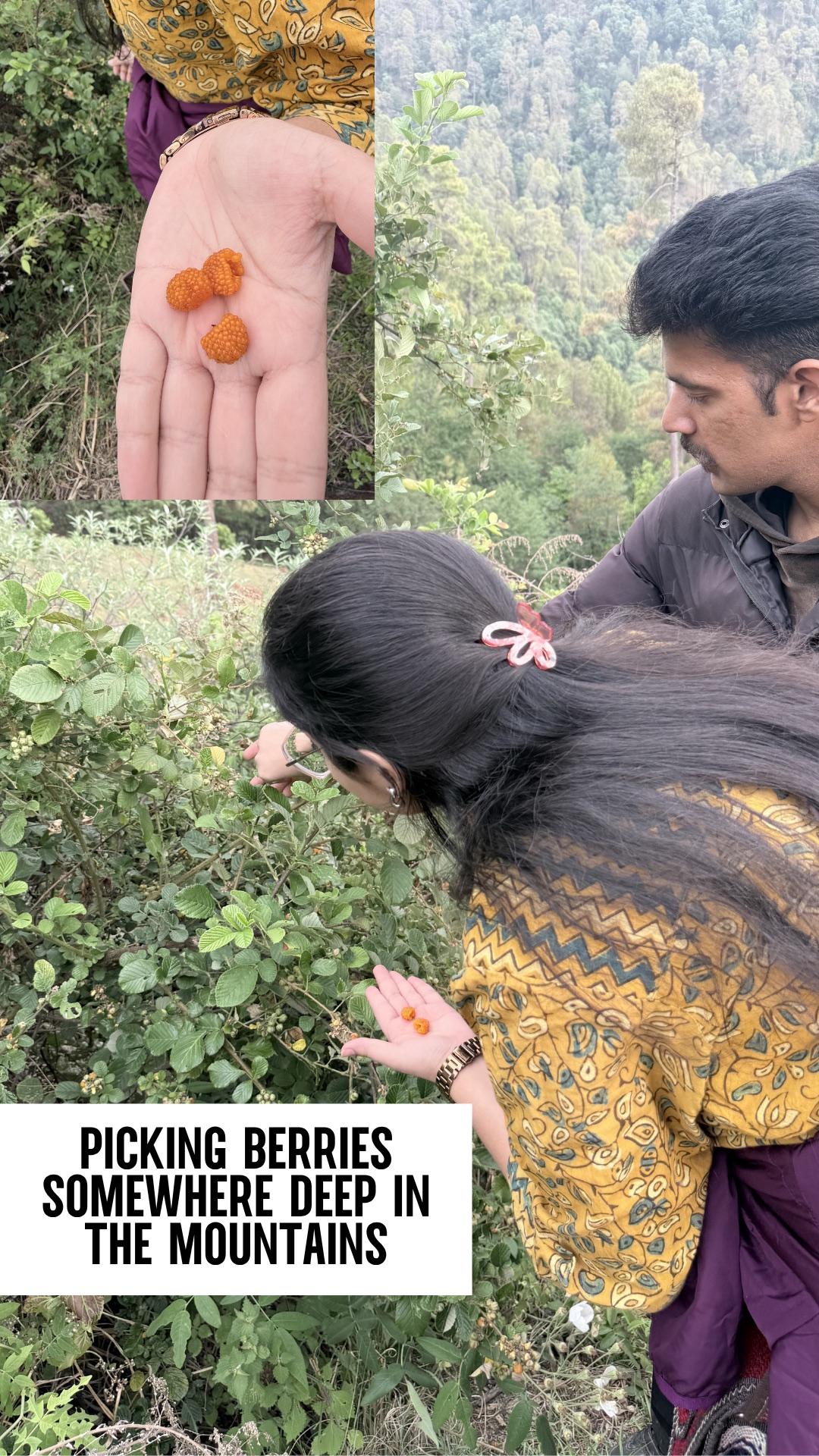
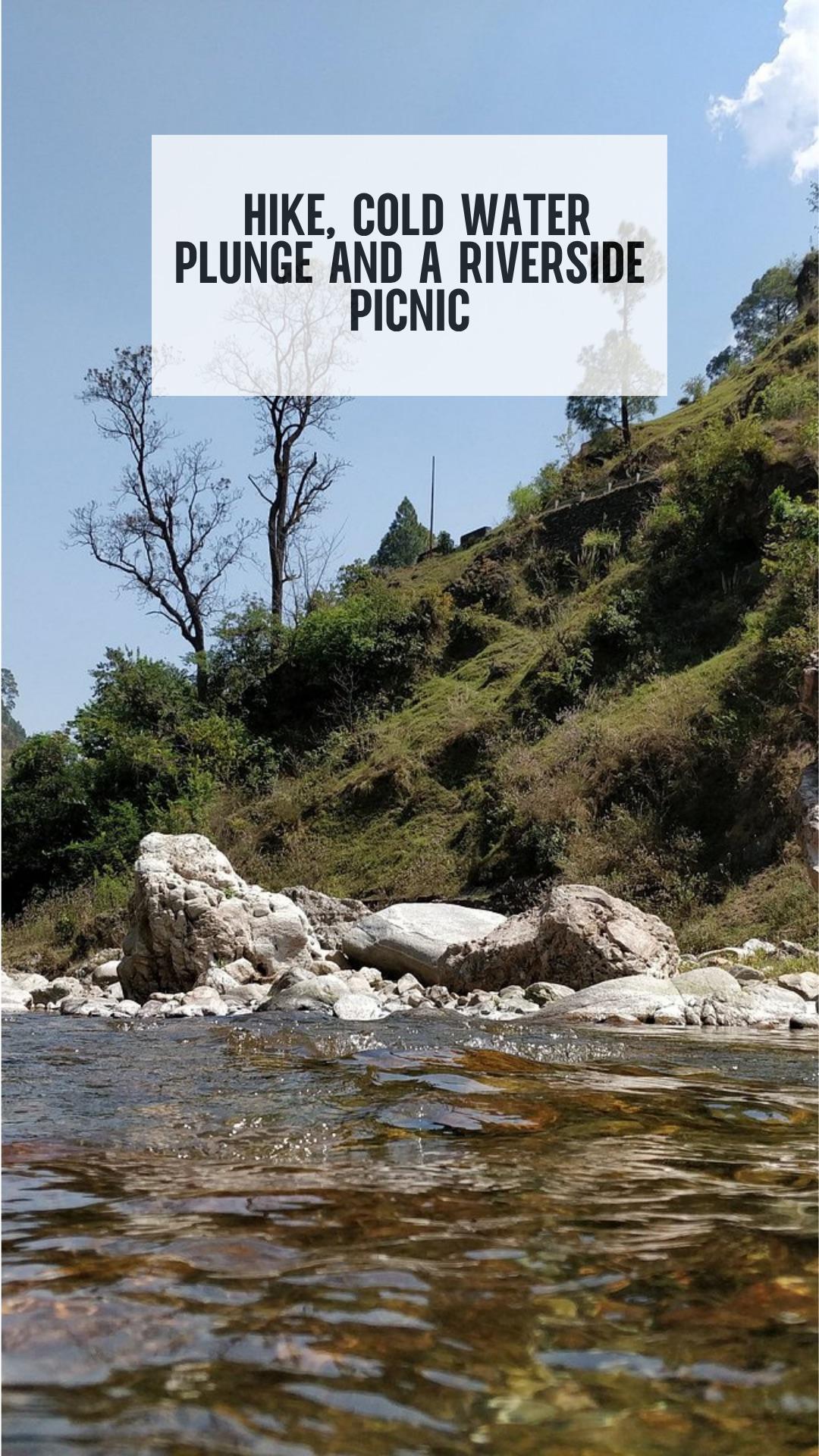
The trail ends at a clear, cold river running over white boulders. Some people wade in up to their ankles, some plunge in all the way and regret nothing, and everyone eats a picnic on the rocks. On the way back, the group runs a small clean-up of the trail, picking up the plastic other visitors left behind. It’s a small thing, but it means you leave the forest a little better than you found it.
A cooking lesson in a village kitchen
On the second afternoon you walk to a nearby village, where life still runs on the seasons, and you spend it in a Kumaoni kitchen.
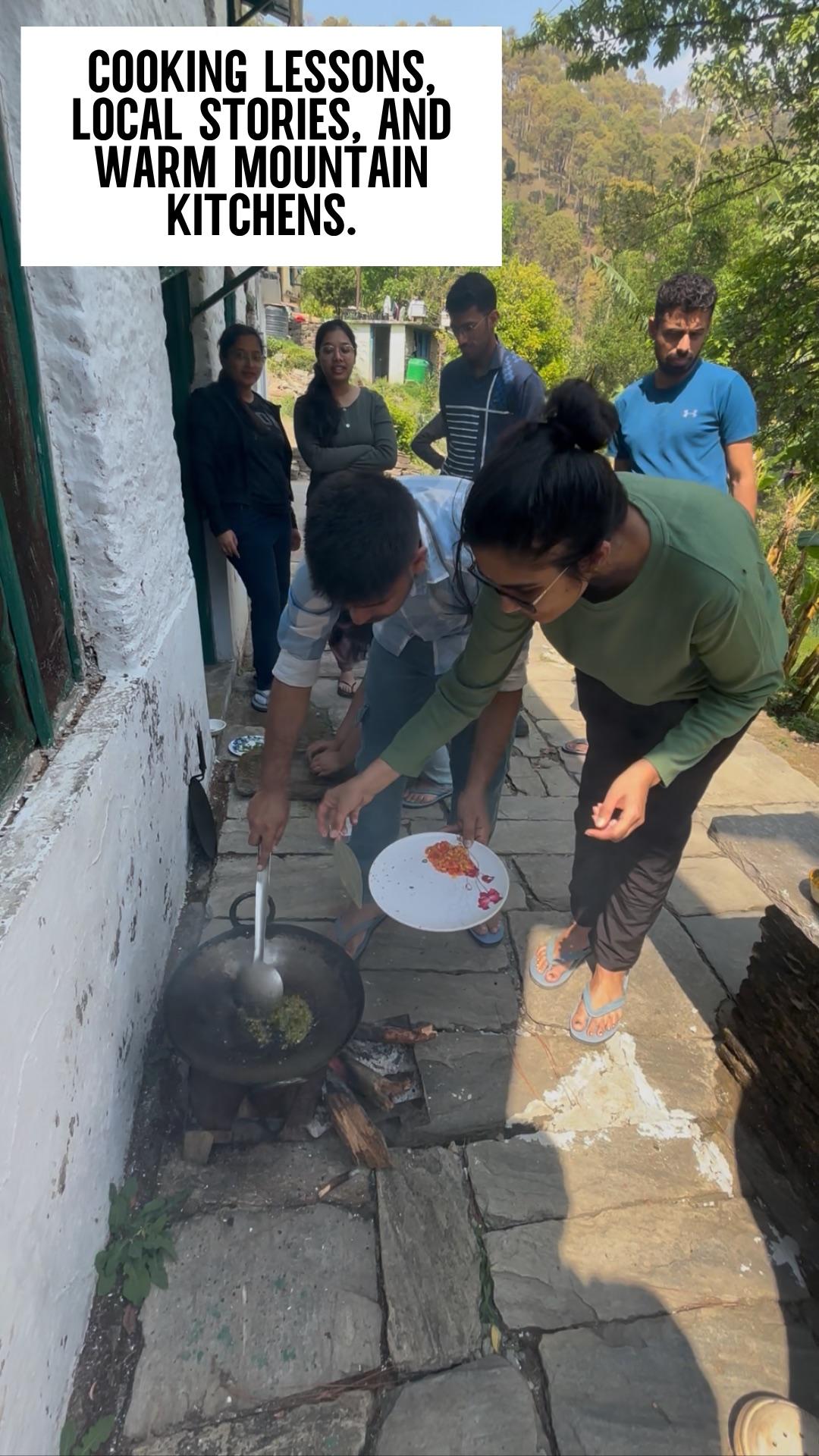
The cooking lesson happens around a wood fire outside a village home. Your host shows you how a local dish is really made, then hands you the ladle. Everyone crowds around to watch, help and taste, and the results get eaten on the spot.
While the food cooks, the conversations start, and they’re the part people remember. Families talk about winters, about farming terraces that are harder to keep up every year, and about children who have moved to the cities. It’s the kind of exchange you won’t find on any sightseeing itinerary.
And that’s not the only surprise. Every Alternate Travel trip also has one mystery experience that nobody sees coming, so we won’t spoil it here.
Bonfires, stories and a table full of food
Nights in Binsar get properly cold, and with almost no light pollution the sky fills up with stars. The group gathers around the fire for a reflection circle, where everyone shares one thing the day stirred up. It sounds serious. It usually ends in laughter.
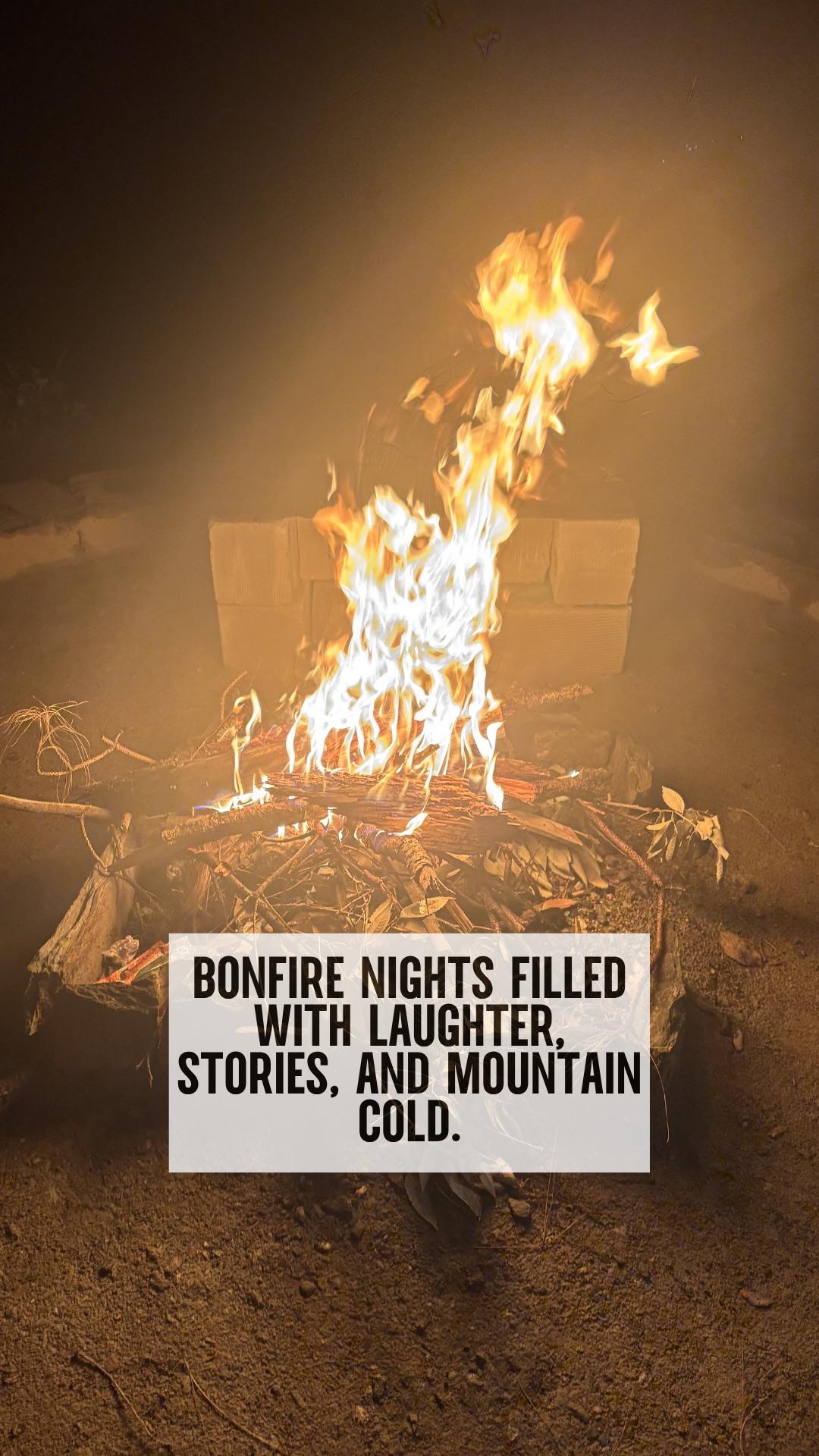
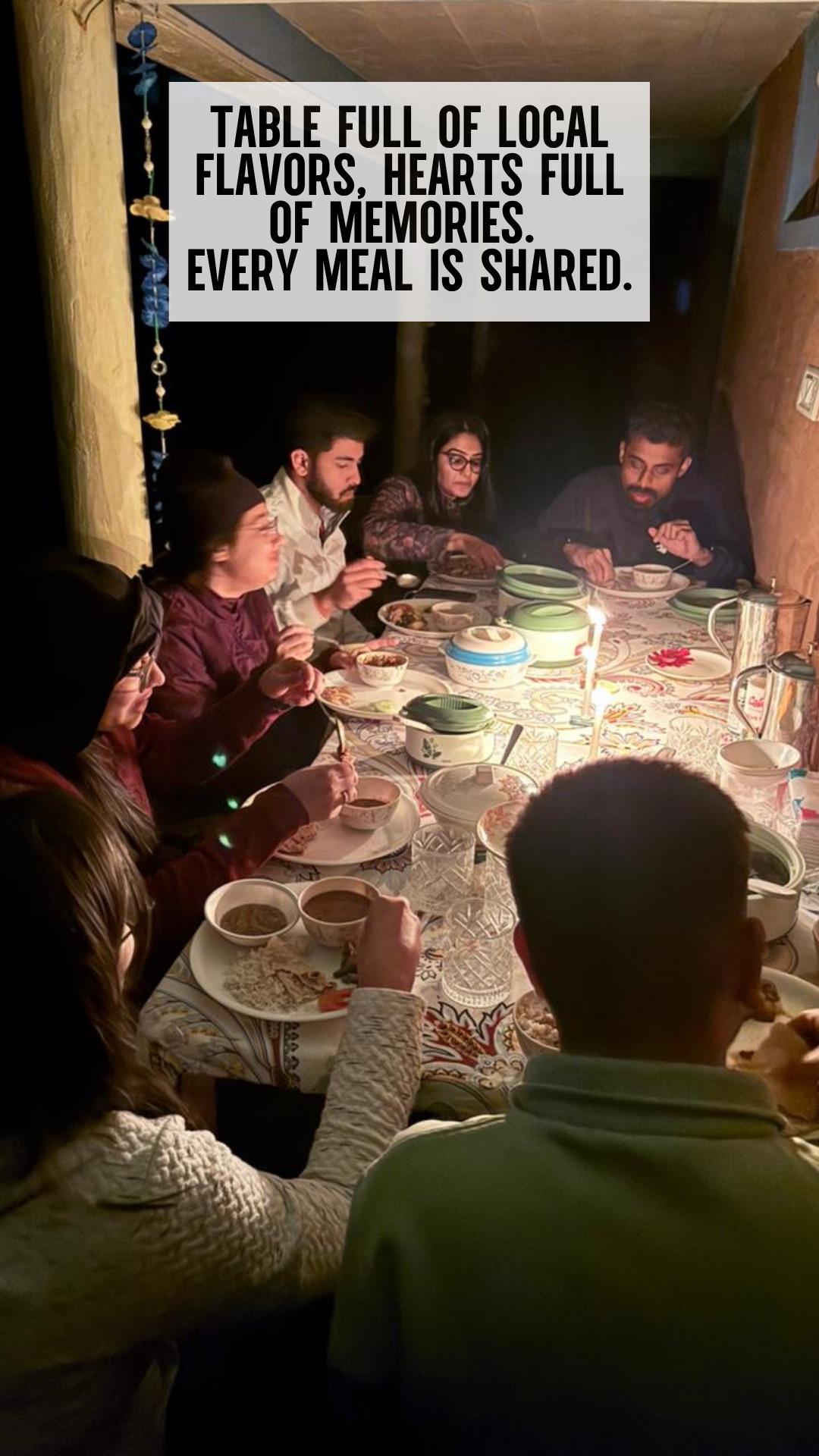
Dinner is home-cooked and shared at one long table, often by candle light when the power flickers, with second helpings that nobody refuses. By now the group of strangers from the tempo traveller feels like old friends.
Come to Binsar with us
Next departure 3 Dec – 6 Dec · ₹12,500 per person · up to 10 travellers · transport, forest homestay and all meals included
See the next Binsar tripDay 3: taking the forest back with you
The last morning is slow. An optional quiet walk, one last breakfast together, and then the journals come out: everyone writes at least one page before leaving. The group shares what shifted for them over the three days, and there are small goodies to carry home.
You leave Binsar at 1 PM and you’re back in Delhi by 10:30–11 PM. The traffic is still honking and your phone is buzzing again. But something is quieter than when you left.
Planning your own Binsar trip from Delhi
Whether you come with us or on your own, here’s what you need to know.
How to reach Binsar from Delhi
- By road: about 380 km and 8–9 hours via Moradabad, Rampur and Almora. Leaving at night means you arrive in the morning without losing a day.
- By train + cab: take an overnight train to Kathgodam, the nearest railway station, then a cab for the last 117 km through the hills. Almora, 33 km from Binsar, is the last big town.
- With a group: our trips leave Delhi at 8:30 PM in a push-back AC tempo traveller and reach Binsar around 8 AM.
Best time to visit Binsar
- April to June: pleasant days, cool nights, and a welcome escape from Delhi’s summer heat. It’s also hisalu season.
- September to November: the clearest skies of the year and the best Himalayan views, with Nanda Devi, Trishul and Panchachuli visible from Zero Point.
- December to February: cold, quiet and sometimes snowy. Beautiful, but roads can close after heavy snowfall.
- July and August: monsoon. The forest is lush, but the views are often hidden by cloud.
Other things to do in Binsar
- Zero Point, the sanctuary’s most famous viewpoint, reached by a short forest trek
- Birdwatching: Binsar has over 200 bird species, so pack binoculars
- Binsar Mahadev, an old Shiva temple set among tall trees
- Stargazing on clear nights
Where to stay
Binsar has forest homestays and small lodges rather than hotels. Staying with a local family, eating their food and waking up in the forest is the best way to experience the place. Some stays, like ours, can only be reached on foot from the road.
What to pack
- Warm layers, even in summer, because nights get cold
- Comfortable walking shoes with good grip
- A light rain jacket
- Something you don’t mind getting wet at the river
- Sunscreen and insect repellent
- A torch or headlamp
- Binoculars, if you like birds
- Any personal medicines
- Some cash, since card and UPI payments can fail when the network does
What our Binsar trip includes
- Return transport from Delhi
- 2 nights at a forest homestay
- All meals, cooked fresh by the homestay family
- Guided nature walks with local experts
- Bonfire and stargazing evenings
- A Kumaoni cooking lesson in a village home
- Village visits and interactions with local communities
- A cycling experience (subject to availability)
- A travel journal and a few surprises
Groups are capped at 10 people. Read more about the area in our Binsar travel guide, see all upcoming trips from Delhi, or, if you want something shorter and more active, try cycling in Bir Billing.
Come to Binsar with us
Next departure 3 Dec – 6 Dec · ₹12,500 per person · up to 10 travellers · transport, forest homestay and all meals included
Book the next Binsar tripBinsar trip: frequently asked questions
How far is Binsar from Delhi?
Binsar is around 380 km from Delhi, about 8–9 hours by road via Moradabad, Rampur and Almora. The nearest town is Almora (33 km) and the nearest railway station is Kathgodam (117 km).
How many days are enough for Binsar?
Two nights in Binsar is ideal. Leave Delhi on a Thursday or Friday night, arrive in the morning, spend two full days in the forest, and head back on the third day.
What is the best time to visit Binsar?
April to June and September to November, when skies are clear and Himalayan peaks like Nanda Devi and Trishul are visible. Winter (December to February) is quiet and beautiful but cold, with occasional snow.
What are the best things to do in Binsar?
Walk the oak and rhododendron forests, watch sunrise or sunset over the Himalayas from Zero Point, go birdwatching (Binsar has over 200 bird species), hike down to a river, visit Binsar Mahadev temple, and spend time in the surrounding Kumaoni villages.
Is there mobile network in Binsar?
Network is limited. BSNL has the best coverage; Airtel and Jio are patchy in parts of the sanctuary. Most forest stays have WiFi, but plan to be offline for much of the day.
Is Binsar safe for solo travellers and women?
Yes. Binsar is a peaceful place with a small local community and is considered very safe, including for solo women travellers. Going with a small guided group is an easy way to do it without planning logistics yourself.
How much does a Binsar group trip from Delhi cost?
Our 3-day Binsar group trip is ₹12,500 per person, including return transport from Delhi, 2 nights at a forest homestay, all meals, guided nature walks, a Kumaoni cooking lesson in a village home and the group experiences.